Due to the sensitivity of this study data presented in this article was intentionally obscured.
A leading HealthTech company was seeking to better align their software with Medical Receptionists. In this research study, I interviewed Medical Receptionists using the Jobs to be Done framework. By pinpointing the jobs they carried out and how they executed them, we aimed to identify areas for enhancing a Medical Receptionists’ experience when communicating with patients.
The research consisted of 10 ninety-minute discussions with participants who handled patient calls/messages as a core aspect of their job. All participants were full-time employees of a healthcare provider with a minimum of 250 employees.
The key research questions were:
- What are the main responsibilities or jobs of patient representatives?
- What order are those jobs performed?
- What tasks do Medical Receptionists most frequently engage in when interacting with patients?
- What tools do they utilize for these tasks?
- What obstacles do they face in their role?
Data analysis and Moderation
Data collection and analysis occurred concurrently, as insights from prior sessions influence the moderation of upcoming sessions. For instance, by the fourth session, three primary jobs were identified while some mentioned two additional jobs that other receptionists are sometimes responsible for. Follow-up sessions validated the three essential jobs. Future participants that also conducted one or both of the additional jobs were asked to elaborate about them.
There were two main layers of data collection that took place.
In the first part, the jobs performed by medical receptionists were discovered.
The questions asked in this stage were:
- If you were to break up your responsibilities at work what are the jobs you perform?
- How do you perform those jobs?
- How do those jobs relate to one another? Is there a sequence those jobs are performed?
For all sessions after the initial three sessions an additional question was asked:
- Other participants also mentioned these other jobs. Do you also perform any of these jobs?
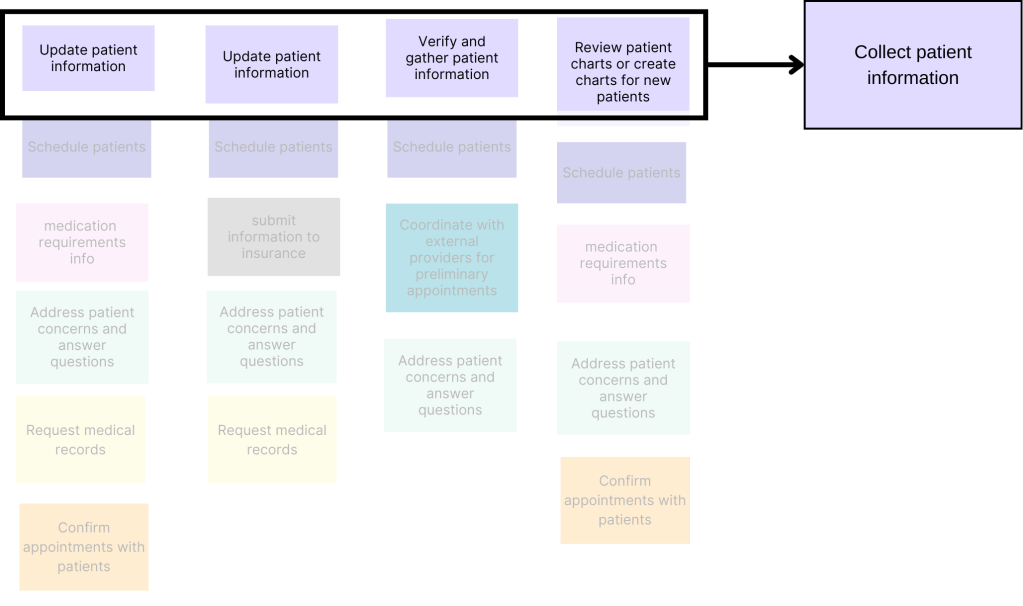
The image above displays various jobs mentioned by a participant, with each row representing their responses. The mentioned jobs were compared and color-coded based on the similarities to descriptions provided by other participants.
The latter part of every session is focused on gaining a deeper understanding of each job. This is where various tasks related to the job are explored, including tools, procedures, constraints, and any challenges faced.
The questions asked in this stage were:
- Let’s expand on [job mentioned]. What triggers that job to begin?
- What are the steps for completing this job?
- What are the tools used to assist you with completing this job?
- What are the challenges you face when completing this job?
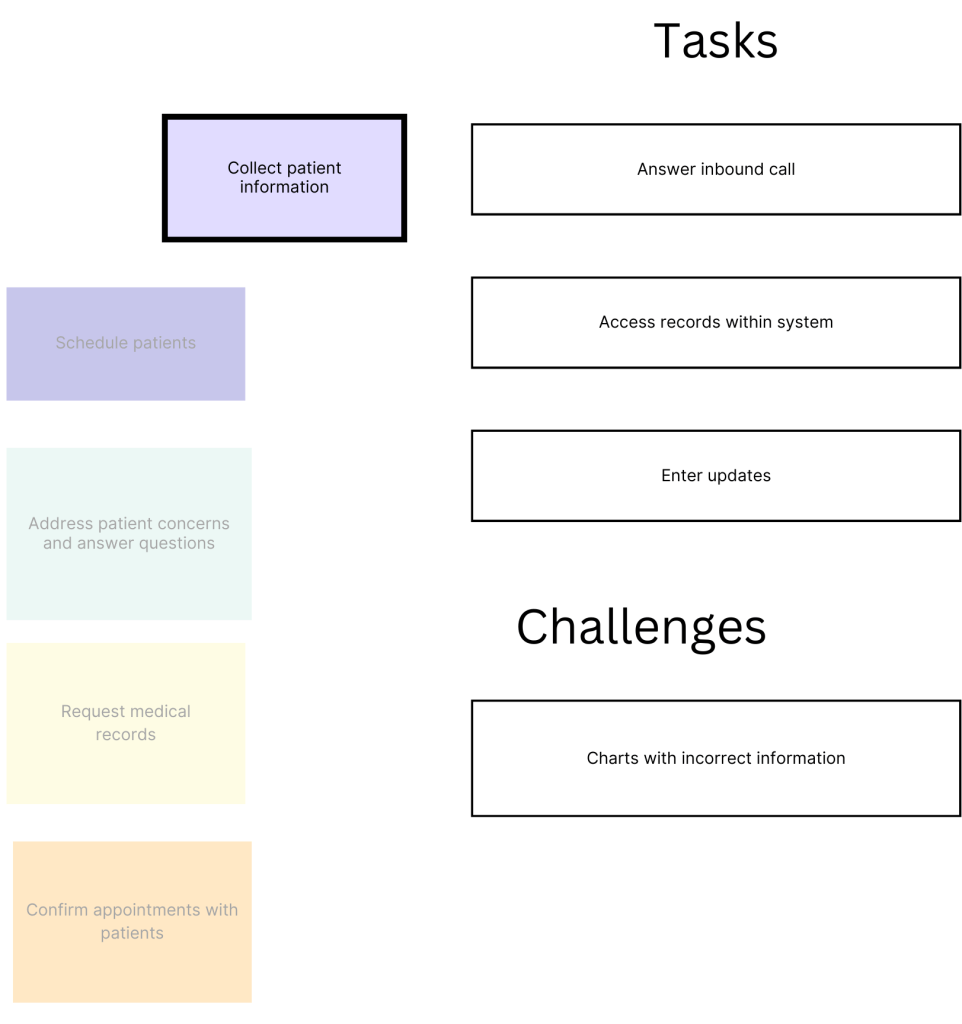
The image above illustrates how each job is broken down into the tasks required for completion, the challenges faced, the pain points encountered, and the tools utilized to accomplish the job.
After the sessions concluded, all responses were collectively analyzed to create a Journey Map that illustrates what a typical day entails, along with slides detailing what each job involves.
Key Findings
Medical receptionists perform all of their jobs concurrently and typically while communicating with a patient, rather than following a fixed sequence.
The Journey map below illustrates this relationship.

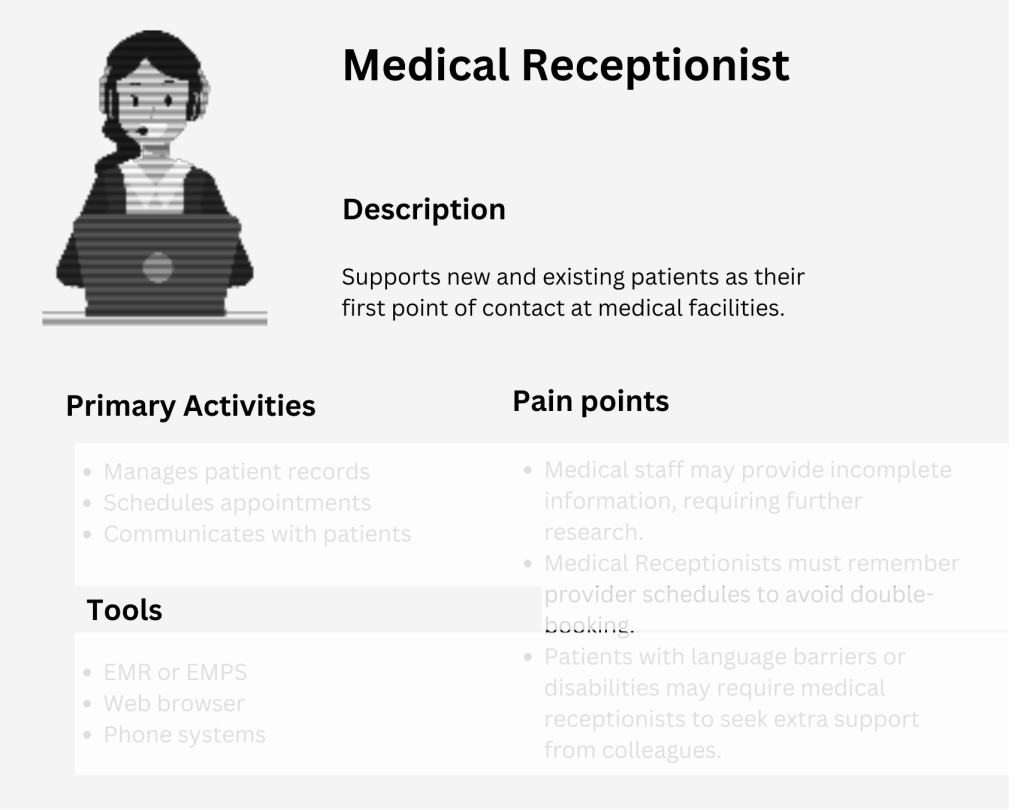
This persona was created as a reference point for conducting future research.
Next Steps
The subsequent phase of this research entails conducting a study to identify key opportunities and perform a comprehensive analysis of the specific tasks performed by Medical Receptionists.
 Elazar Weiner